
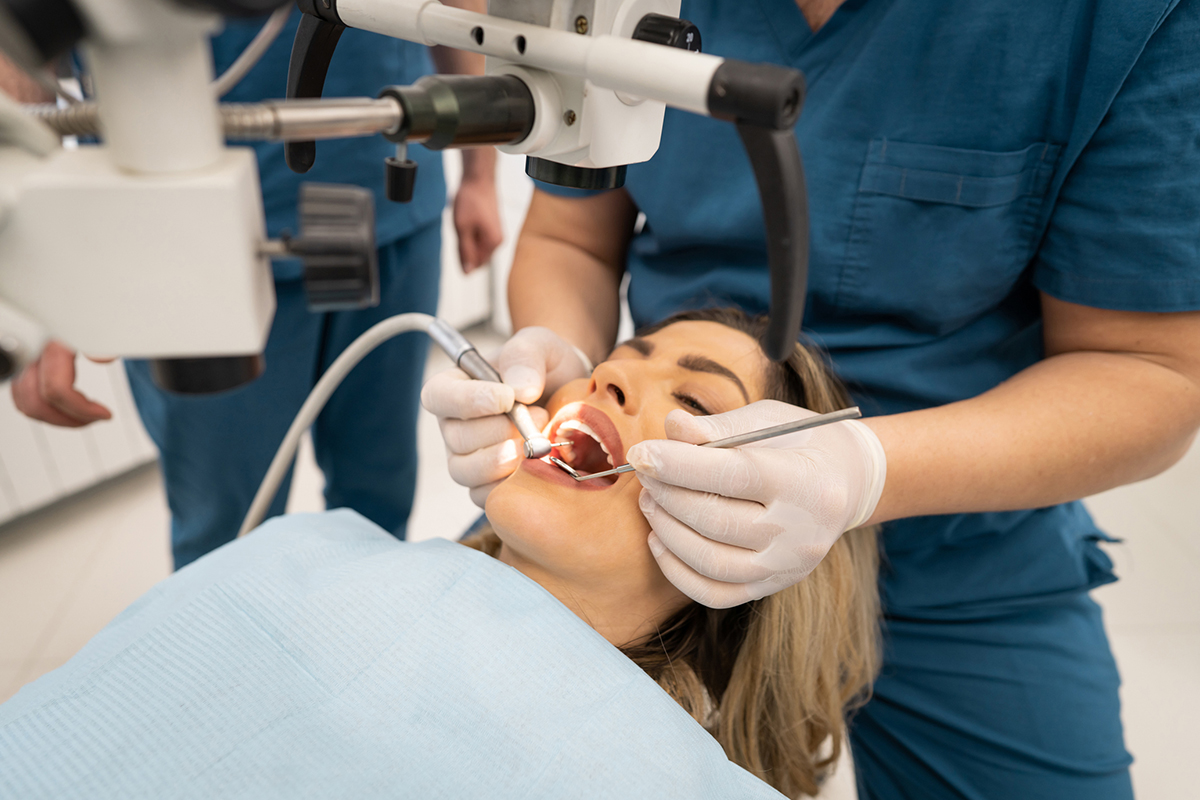
In the past, it would not be uncommon for patients to describe root canal treatments as lengthy, highly complex, and uncomfortable procedures. Thankfully, modern endodontic technology has transformed the treatment, leaving patients with a much more pleasant experience.
So, what makes today’s root canals more comfortable and efficient? Let’s talk about it.
Advanced Imaging
Being able to see beyond what the eyes can see is crucial for successful outcomes. And the improvements in this area have made a significant difference. Here’s why.
Traditional X-rays were two-dimensional, giving dentists only a limited view of the tooth and everything surrounding it. With the introduction of digital imaging and 3D cone beam computed tomography (CBCT), the tooth can be seen from every angle.
There is no denying that the anatomy of the root is complex, often hiding infections, fractures, and resorption that isn’t always visible in a regular X-ray. Advanced imaging allows for a clearer diagnosis and the creation of more effective treatment plans. The result? A reduced risk of complications and greater outcomes for patients.
Increased Precision
Dental microscopes are so important when performing a root canal, as the areas deep within the tooth are so very small and intricate. High-powered magnification with lighting can allow the endodontist to see details that may otherwise be missed.
Utilizing microscopes improves precision, making each step more thorough and effective. The need for retreatments is less common, bringing peace to patients.
A Faster, More Comfortable Procedure
Advanced instruments have changed the way root canals are handled. For instance, the use of flexible files is more adaptive, making it easier to clean out the canals without causing too much stress on the tooth itself. Dentists are able to perform the procedure both gently and efficiently.
Combining these renewed techniques with modern anesthetics allows root canal treatments to be faster and much more comfortable than they used to be. Patients find that appointments are straightforward and relatively pain-free.
Thorough Disinfection Promotes Healing
Endodontic treatment requires the elimination of bacteria. Irrigation and disinfection within the root canals are crucial for restoring the tooth, but accessing the deepest areas can be challenging with traditional tools. Today, greater reach is found while using ultrasonic and laser-assisted systems.
As a result, patients have a significantly lower chance of experiencing a repeat infection, while also benefiting from the ideal environment for healing.
Preserving Natural Teeth
Endodontists always strive to preserve natural teeth and do so by removing the infection and sealing it up. With modern endodontic technology, treated teeth can become stronger and more durable with the right restoration. It also leads to proper chewing function, jaw health, and improved oral health.
Just remember that the goal is always to help patients keep their healthy teeth. And the advancements in technology and procedures make this more possible now than ever before.
Frequently Asked Questions
How long does a root canal procedure take?
A root canal procedure usually lasts about 45 to 90 minutes, depending on the severity. Keep in mind that a second appointment may be necessary to have the dental crown placed.
Are antibiotics needed after a root canal?
Sometimes. If the infection has spread beyond the tooth or there are health-related concerns, antibiotics may be prescribed. However, with modern disinfecting tools, the need for medication is often eliminated.
At Towson Endodontics, we are committed to providing our patients with state-of-the-art endodontic care that makes comfort, precision, and lasting results a priority. If you are in need of a root canal or have been experiencing tooth pain, schedule an appointment today.